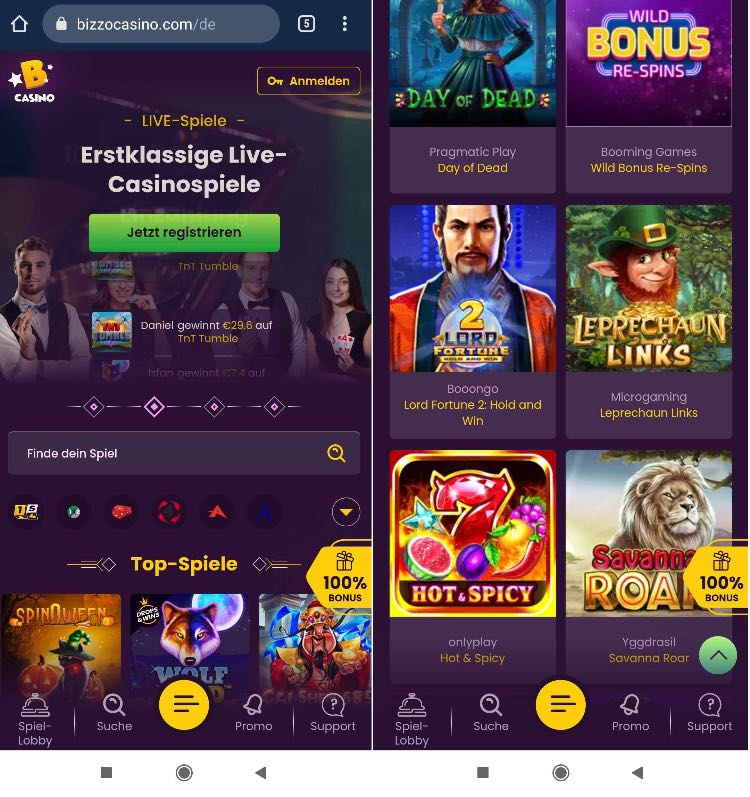
When we choose to gamble at an online casino, we are putting our trust in a digital platform to handle our money, protect our personal data, and deliver genuinely random outcomes. For players in the Netherlands, where the regulatory framework is becoming increasingly sophisticated, understanding the mechanics behind this trust is essential. This guide explores the rigorous world of casino auditing, a behind-the-scenes ecosystem that transforms a licensed platform like Bizzo Casino from a simple entertainment portal into a certified fair environment. We will walk you through the technical standards, the independent bodies that enforce them, and the specific legal obligations that shape your daily gaming experience, ensuring that every spin of the reel and every card dealt is subject to impartial scrutiny.
The Core of Digital Trust: Why Auditing Matters
In a physical casino, trust is built through sensory observation; you can watch the dealer shuffle the cards and see the roulette ball land in a pocket. In the digital realm, these physical cues are substituted by complex algorithms and server-side operations that remain invisible to the player. This opacity produces a critical need for third-party verification. Auditing serves as the objective bridge between the operator’s code and the player’s screen, verifying that the mathematical models governing the games are not skewed in the operator’s favour beyond the stated house edge. Without this layer of independent testing, players would have no empirical way to tell between a fair game and a rigged simulation, making auditing the absolute cornerstone of a legitimate iGaming market in the Netherlands and globally.
The auditing process goes far beyond simply checking if a slot machine pays out occasionally. It dives into the integrity of the Random Number Generator (RNG), which is the digital engine that ensures every outcome is statistically independent and unpredictable. For a platform operating under a strict European license, auditors demand that the RNG produces sequences that cannot be manipulated or predicted, even with sophisticated computational models. Furthermore, the audit confirms the Return to Player (RTP) percentage across millions of simulated spins to ensure the actual mathematical performance matches the theoretical model published in the game’s paytable. This dual focus on randomness and payout accuracy represents the bedrock of a secure gaming environment where players can focus on strategy and entertainment rather than worrying about the legitimacy of the software.
Anti-Money Laundering and Compliance Audits
Internet casinos are classified as financial institutions under European law, which makes them adhere to rigorous Anti-Money Laundering and Counter-Terrorist Financing regulations bizzo.com.nl. An AML audit scrutinizes the operator’s internal policies, software systems, and staff training programs to ensure they effectively prevent the platform from being used to clean illicit funds. Auditors review the Customer Due Diligence (CDD) process, checking how the casino verifies a player’s identity using official documents. They look for automated transaction monitoring systems that detect suspicious patterns, such as a player adding a large sum and immediately cashing out without significant gameplay, a classic sign of money laundering that generates a Suspicious Transaction Report to the Dutch Financial Intelligence Unit (FIU-Nederland).
For a legal entity operating in the Netherlands, the AML audit also verifies compliance with sanctions lists and politically exposed persons (PEP) screening. The auditors will assess the system by running dummy accounts against global watchlists to guarantee the software correctly blocks prohibited individuals. They also examine the “source of funds” checks for high-value players, ensuring the casino requests proof of income or wealth before approving large deposits. This layer of auditing is hidden to the average recreational player but is crucial for the integrity of the entire financial system. It guarantees that the platform you are playing on is a clean, ethical business that actively combats financial crime, rather than a shell for illegal activities, reinforcing the overall stability and reputation of the Dutch gaming market.
The Legal Affiliates Ecosystem: A Joint Responsibility
The regulatory audit trail goes beyond the casino operator to include the affiliate marketing partners who market the brand. In the Netherlands, the Ksa keeps licensees fully responsible for the activities of their affiliates. This implies the affiliate compliance structure of a operator like Bizzo Casino must include a full examination of its marketing partners. We must verify that affiliates are not directing marketing at minors or self-excluded individuals, that they present mandatory warning texts and the 18+ age restriction logo, and that they do not issue misleading claims about guaranteed winnings or risk-free gambling. An affiliate audit is a assessment of the partner’s website content, social media channels, and email marketing practices to ensure full alignment with Dutch advertising codes.
This collective responsibility establishes a open and safe marketing ecosystem. The operator’s legal team performs ongoing compliance sweeps, using automated tools to scan affiliate sites for prohibited terms or non-compliant bonus advertisements. If an affiliate does not pass a review or declines to correct a violation, the contractual agreement is terminated to safeguard the license. For the player, this indicates that the promotional banners and review sites you see should offer an truthful representation of the product. When we audit an affiliate, we are checking that the bonus terms and conditions they show are correct and that they clearly state the wagering requirements. This prevents players https://www.avforums.com/threads/how-will-derren-brown-predict-the-lottery.1075598/page-10 from being attracted by false promises, ensuring that the first touchpoint with a casino brand is as open as the gaming floor itself.
Independent Testing Laboratories: The Gatekeepers of Fairness
Gaming site inspections are not carried out by the casino owners or by the state authorities outright; they are carried out by dedicated, neutral testing labs accredited to international standards. These are privately owned firms that have been vetted and authorized by supervisory authorities like the Ksa in the Dutch market or the Malta Gambling Authority abroad. Well-known entities such as eCOGRA, iTech Labs, GLI (Gaming Laboratories International), and BMM Testlabs are the top tier in this field. These organizations retain mathematicians, software engineers, and cybersecurity specialists who possess the technical capability to dismantle and analyze sophisticated game systems. Their autonomy is their key strength; they have no financial stake in the casino’s profitability, ensuring their results are impartial and scientifically rigorous.
The procedures inside these facilities is exhaustive. They do not just look at the active variant of the game; they access the original code, the configuration files, and the server environment specifications. They perform a code review to identify “god modes” or covert access channels that could allow an operator to manipulate results. They also evaluate the user interface to confirm it correctly interprets the data sent by the server. For the Dutch market, these labs also validate the technical compliance with the specific Ksa reporting standards, such as the capability for the Central Monitoring System (CDB) to read real-time data from the casino’s servers. The seal of approval from any such organization is the definitive peace of mind for gamblers that the games are not only fair but also safe against outside cyber intrusions.
Decoding the Purpose of the Random Number Generator (RNG)
The Random Number Generator is the hidden heartbeat of every digital casino game, yet it is often the most misinterpreted component. In simple terms, an RNG is a cryptographic algorithm that generates a sequence of numbers or symbols that lack any pattern. In the context of a slot game, the moment you press the spin button, the RNG instantly picks a random number that corresponds to a specific set of symbols on the reels. The critical audit point here is “unpredictability.” We must ensure that the RNG does not drift toward a predictable sequence over time and that it is truly “seeded” by an external, entropic source that cannot be reverse-engineered by a malicious actor or the casino operator themselves, ensuring a fresh, unbiased result every single time.
Auditors utilize a battery of statistical tests to certify an RNG, including the chi-squared test, the Kolmogorov-Smirnov test, and diehard tests that run billions of simulated rounds. These tests look for subtle biases, such as a disproportionate number of certain cards appearing in blackjack or a non-random distribution of symbols on a video slot. For players in the Netherlands, this is particularly important because the Ksa requires that the RNG is not just certified once but is continuously monitored or re-tested at regular intervals. This stops a scenario where a software update inadvertently adds a flaw. When you play at a legally compliant platform, you are not playing against a predetermined script; you are interacting with a certified mathematical model that replicates the entropy of the physical world.
Internal Reviews vs. Independent Audits: Understanding the Difference
To maintain a robust operational state, a well-run casino uses a dual-layer method to auditing. Inside audits are conducted by the provider’s own compliance team or an internal audit department. These are everyday, weekly, or monthly reviews that concentrate on operational efficiency and instant risk detection. An internal auditor might evaluate a sample of player withdrawals to ensure the payments team processed them within the 24-hour window pledged in the terms and conditions, or they might verify that all customer support interactions pertaining to responsible gaming were managed appropriately. These internal controls work as the initial line of protection, capturing minor procedural errors before they escalate into regulatory infractions that could result in fines from the Ksa.
External audits, on the other hand, are the proper statutory examinations conducted by the unbiased testing labs and accounting firms we talked about earlier. These are scheduled events, often once-a-year, that lead to a formal accreditation report delivered to the regulator. While an internal audit might verify if a game is working, an external audit mathematically demonstrates that the game is fair. The external auditor is not an worker of the casino and reports directly directly to the board or the regulator, ensuring complete objectivity. For a player, the interplay between these two types of audits means that the platform is being watched unceasingly, not just once a year. The internal team resolves issues in real-time, while the external team validates the entire framework’s architectural integrity, forming a comprehensive protection net.
Return to Player (RTP) and Payout Verification
Player Return, or RTP, is a estimated statistical computation that indicates the percentage of total wagers a game will pay back to players over a very long period. It is crucial to grasp that this is not a short-term guarantee; a slot with a 96% RTP is intended to keep 4% of all wagers over millions of spins, not to return you back €96 for every €100 you bet in a single session. The auditing process checks this long-term mathematical model by simulating the game logic millions, and often billions, of times using automated software scripts. The auditors match the actual payout distribution from their analysis against the theoretical payout table provided by the game developer to ensure there is no discrepancy, proving that the game engine is functioning exactly as described.
This verification process is vital for the transparency required by Dutch regulations. Auditors do not simply believe the developer’s word; they disassemble the code and execute the simulation in a controlled environment. They chart every possible winning combination and its associated probability to make sure the math adds up perfectly. For a platform like Bizzo Casino, offering a varied library of games, this means that every single title from every third-party provider has undergone this rigorous mathematical vetting. As a player, this indicates you can look at the paytable information, often available within the game menu, and trust that the 96.5% or 97% figure shown there has been empirically verified by an independent third party, allowing you to make informed decisions about which games fit your risk tolerance and playing style.
What lies ahead for Casino Audits: Blockchain and Real-Time Verification
The world of audits is changing quickly, propelled by progress in cryptographic technology and a need for instant transparency. Classic auditing is retrospective; an auditor checks the code in a lab, and a certificate is provided for a set period. The future indicates “provably fair” systems and real-time monitoring dashboards driven by blockchain technology. In a blockchain-based audit model, the casino would release the cryptographic hash of the server seed prior to a player places a bet. After the outcome is established, the player can employ a third-party tool to verify that the result was created deterministically from that seed and their client input, mathematically proving the casino could not have altered the outcome after the bet was placed. This shifts trust from a periodic certificate to cryptographic truth.
For the Dutch market, which cherishes consumer protection, we expect regulators like the Ksa will start to investigate these real-time verification standards. Instead of waiting for a monthly RTP report, a regulator could have a dashboard displaying the live RTP and volatility index of every game on a licensed platform. This would facilitate instantaneous detection of anomalies. While we are in the transitional phase, the current auditing standards remain exceptionally robust. However, as a forward-thinking player, grasping these emerging technologies helps you recognize the direction of the industry. The goal is a zero-latency trust environment where the fairness of your game session is confirmed mathematically at the exact moment you play, leaving zero room for doubt or manipulation.
Steps to Confirm an Operator’s Audit Credentials

As an informed player in the Netherlands, you do not need to take a casino’s word for its legitimacy; you can independently verify its audit credentials. The primary step is to scroll to the footer of the casino website. Legally compliant operators are obligated to display a active logo or seal from their testing agency, such as eCOGRA’s “Safe and Fair” seal or an iTech Labs certificate. These are not simply decorative images; they are dynamic links that lead to a real-time verification page on the auditor’s official website. Clicking this seal should reveal the current status of the operator’s certification, the date of the most recent audit, and the specific games or systems covered. If the seal is static or unclickable, this is a serious red flag that implies the operator may be using a fraudulent badge.
Beyond the website footer, you can cross-reference the operator’s license number with the Kansspelautoriteit’s public register. The register will detail the specific domain names allowed to operate under that license. You should also examine the audit summary reports, which many respected casinos release openly. These documents, often called “RTP Verification Reports” or “Payout Percentage Reviews,” compile the actual payout data across different game categories for the past month. By studying these reports, you can view the true RTP that players had, which should closely match the theoretical RTP. This standard of radical transparency is the sign of a platform that has no secrets and views auditing not as a chore, but as a strategic benefit to earn your lasting loyalty.
Security Audits for Data: Safeguarding Your Information
While gaming fairness is essential, the security of sensitive data is an similarly vital aspect of the verification process. When you create an account at an online casino, you share a wealth of personal details, including your complete name, address, date of birth, and payment card details. An information security audit, frequently following the ISO 27001 framework, checks that the provider has put in place a comprehensive Information Security Management System (ISMS). Inspectors examine the system setup for weaknesses, confirm the strength of cryptographic standards like TLS 1.3 for information during transfer, and guarantee that data at rest is stored using AES-256 encryption. For Dutch players, this complies fully with the stringent obligations of the Algemene Verordening Gegevensbescherming (AVG), the national adaptation of GDPR.
These security audits also replicate genuine cyber threats through pen testing. Security experts are engaged to examine the casino’s network defenses, web applications, and API endpoints for weaknesses that could be exploited to steal data or assets. The auditors assess the operator’s emergency response plan to guarantee that in the occurrence of a security incident, the Ksa and impacted users would be informed within the required legal period. We also verify the physical protection of the server facilities, like fingerprint access and disaster recovery protocols. When you make a transaction at a completely verified site, you are protected by tiers of cyber and physical protection that have been rigorously tested by the world’s leading cybersecurity specialists, rendering personal data theft or credit card fraud extremely unlikely.
Understanding the Dutch Legal Landscape for Online Gaming
Since the Remote Gambling Act (Koa) came into force, the Netherlands has created one of Europe’s most rigorous regulatory environments. The Kansspelautoriteit (Ksa) is the regulatory body that not only awards licenses but also imposes a continuous compliance framework that heavily relies on auditing. For a brand like Bizzo Casino to legally provide its services to Dutch players, it must conform to a strict set of technical standards that are confirmed by accredited testing laboratories. These standards are intended to avoid gambling addiction through intervention protocols, guarantee the integrity of the games, and guarantee that player funds are segregated from operational capital. The legal framework converts auditing from a voluntary best practice into a non-negotiable legal mandate, creating a safety net for the player.
The Dutch legal system lays a unique emphasis on the “duty of care” that operators have to their players. This means an audit in the Netherlands does not just check at the fairness of the software; it also inspects the effectiveness of the player protection algorithms. Auditors will test the functionality of reality checks, deposit limits, and time-out features to verify they are activated accurately and immediately. They confirm that the self-exclusion register (Cruks) is integrated flawlessly, so that a vulnerable player is instantly barred from accessing their account across all licensed platforms. This holistic approach to auditing, which reconciles financial integrity with public health, positions the Dutch market a benchmark for quality and safety in the global iGaming market.
Conclusion: Auditing as the User’s Ultimate Safeguard
We have traveled through the detailed layers of the casino auditing process, from the digital randomness of the RNG to the legal obligations of affiliate marketing. It is a system built to protect you from financial loss triggered by dishonest software, identity theft, and aggressive marketing. For players in the Netherlands, the legal framework provided by the Koa Act and the Ksa establishes one of the safest iGaming environments in the world, but only if you play at a authorized and audited operator. The inclusion of seals from iTech Labs or GLI, combined with a valid Ksa license, converts a gaming website into a verified environment where the odds are obvious and your rights are safeguarded by law.
Fundamentally, auditing is the unseen guardian of your entertainment experience. It functions in the background, performing billions of simulations, testing firewalls, and verifying affiliate content so that you can engage yourself in the game without anxiety. When you log in to play, remember that every bet you place is backed by a strict scientific process that has been examined by independent mathematicians and legal experts. By picking a platform that adopts this level of transparency, you are not just a consumer; you are a member in a regulated, fair, and transparent digital ecosystem. Trust the math, verify the seals, and enjoy the game with the certainty that the system has been built to safeguard your interests at every turn.